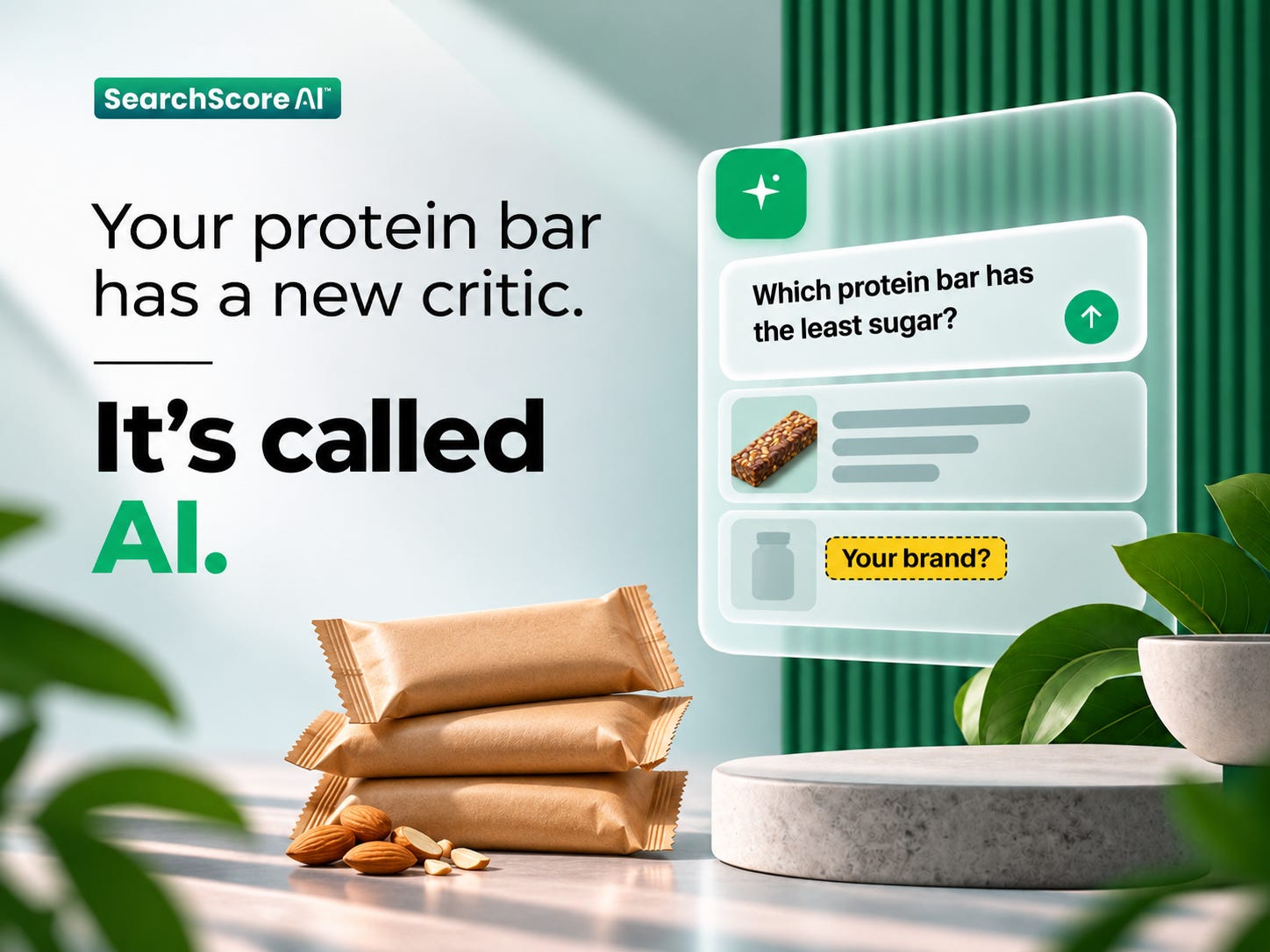
Your protein bar has a new critic: AI.
Buyers paste ingredient lists into ChatGPT now. Here’s what makes a functional food brand pass.

Hi there,
Shoppers have stopped trusting the front of the pack. They photograph the back and ask AI.
“Is this protein bar actually healthy?” “Is this gut shot worth ₹99?” Eight seconds later, AI has an opinion, and usually a better-rated alternative.
Why this matters now
Nearly 60% of urban Indians don’t eat protein-rich food daily, a Country Delight–LocalCircles survey found.
85% don’t track their protein at all.
Demand is huge. So is the confusion, and AI is the one clearing it up.
What people actually type
“How much sugar is in this protein bar?”
“Are probiotic drinks worth it, or just marketing?”
“Is fortified atta better than regular atta?”
None of these name a brand. AI picks one for them.
Why AI skips most brands
Benefit on the front, no dose on the back. “With probiotics”: which strain, how many CFU?
Sugar hiding under five names.
Marketplace listings that contradict the brand site.
One label, rewritten for AI
Before: “Packed with protein and goodness.”
After (example): “20 g protein, 4 g sugar, 6 g fibre per bar. Whey isolate and almonds. No maltitol.”
Numbers AI can compare. That’s what gets recommended.
Score your page (one point each)
Protein, sugar and fibre per serving, in plain text
Active ingredient named, with its amount
“Who is this for?” answered on the page
Same claims on your site, Amazon and Blinkit
A lab report or certification linked
4–5: AI trusts you. 2–3: mentioned, rarely first. 0–1: invisible.
Try it now
Ask ChatGPT, Gemini or Perplexity:
“Which high-protein snack in India has the least added sugar?”
Did your brand come up? Hit reply and tell us. We read every reply.
Want the full picture of how AI sees your brand?
Best,
Team SearchScore.AI
Discussion about this post