Makhana, millets, gud: which brand does AI pick?
India’s winter superfoods went D2C. AI decides which packet looks authentic.

Hi there,
Winter in India has always had its own pantry: gud, til, bajra, dry fruits, gond laddoos. Now that pantry ships in kraft pouches, and the questions have changed.
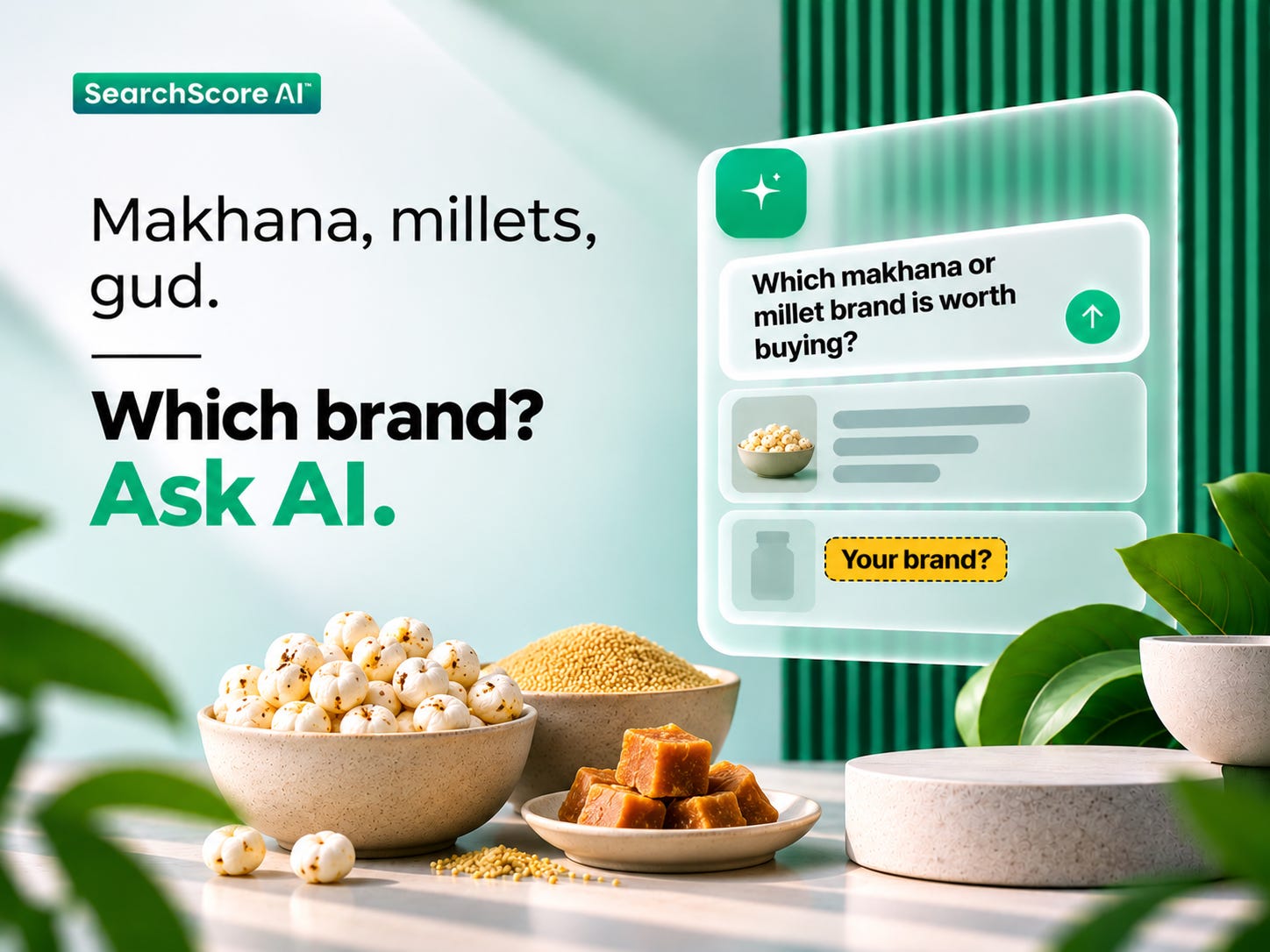
“Is roasted makhana healthier than nuts?” “Which jaggery isn’t adulterated?” “Are millet cookies actually millet?” People ask AI, and AI answers with brand names.
Why this matters now
Winter is peak season for traditional foods, and modern buyers want them without the guesswork. Proof of what’s inside decides which brand AI trusts.
What people actually type
“Is roasted makhana a healthy snack for weight loss?”
“How do I know if jaggery is pure?”
“Best millet brand in India that’s actually 100% millet”
None of these name a brand. AI picks one for them.
Why AI skips most brands
“Made with millets” when millets are 20% of the recipe.
No sourcing story: which farm, which region?
Flavoured variants that quietly add sugar and oil.
One pack, rewritten for AI
Before: “Made with wholesome millets.”
After (example): “62% ragi, 18% jowar. 4 g protein and 3 g sugar per 30 g serving. Sourced from farmer groups in Karnataka.”
Percentages, nutrition and origin. That’s what AI recommends.
Score your page (one point each)
Hero ingredient percentage on the pack and page
Source region and farmer partners named
Nutrition per serving, not just per 100 g
A purity or lab-test page
Recipe pages that answer real questions
4–5: AI trusts you. 2–3: mentioned, rarely first. 0–1: invisible.
Try it now
Ask ChatGPT, Gemini or Perplexity:
“Which roasted makhana brand is the healthiest in India?”
Did your brand come up? Hit reply and tell us. We read every reply.
Want the full picture of how AI sees your brand?
Best,
Team SearchScore.AI
Discussion about this post