

Hi there,
A decade ago, preventive health in India was simple.
You either followed a doctor’s advice or picked a “Full Body Checkup – 100+ Tests” from a lab website and hoped it covered everything.
Today, that journey has quietly changed.
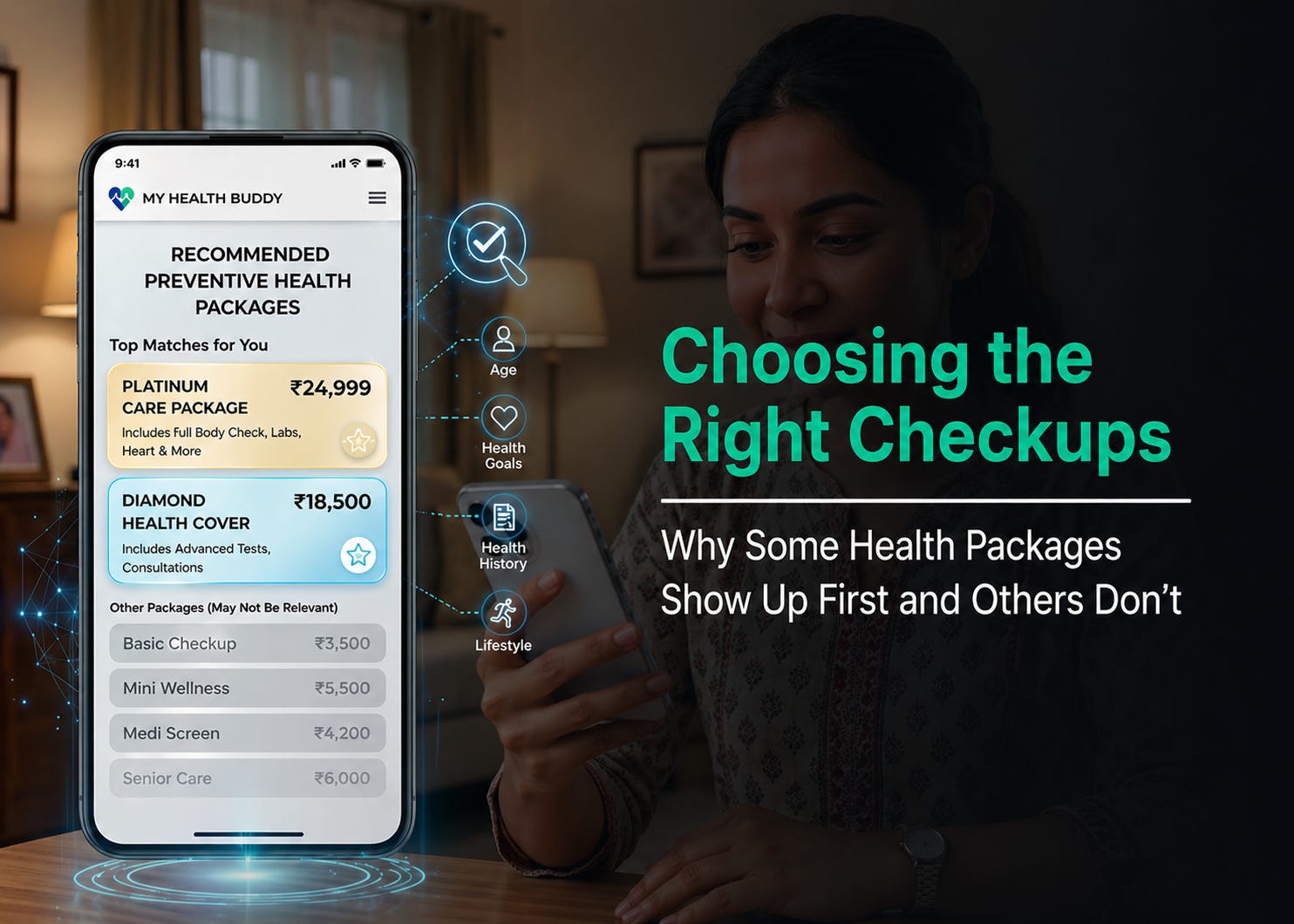
Before even visiting a lab, users are asking AI:
“Best full body checkup under ₹2000?”
“Which tests actually matter at 25/30/40?”
This isn’t just convenience, it’s a shift in how decisions are made.
Before users ever reach labs like Dr. Lal PathLabs or Thyrocare, their choices are already being filtered.
AI Search Snapshot
(India – Preventive Checkups)
57% of users begin health package discovery on AI tools
62% of AI responses prioritize packages with clearly defined parameters
38% of answers under-represent smaller labs due to weak structured data
44% of users ask AI to compare multiple packages within a single prompt
But what’s more interesting is how users behave once they start:
Users refine queries quickly — from “best checkup” to “tests for thyroid, vitamin D, fatigue”
Packages are being broken down mentally — users no longer accept bundles at face value
AI responses favor clarity over scale — “15 relevant tests” often beats “100+ tests”
Decision cycles are shrinking — users move from discovery to shortlist within a single session
In short, AI isn’t just helping users search, it’s helping them think through the decision itself.
What Users Are Asking AI
“Full body checkup vs targeted tests, which is better?”
“Is an executive health package worth it?”
“Best preventive tests for a 30-year-old male”
“Which blood tests are actually necessary?”
“Difference between basic and advanced health packages”
“Are full body checkups useful or just marketing?”
What this signals:
This is no longer a discovery problem, it’s a decision problem.
Users are actively filtering out noise:
They don’t want more tests
They want the right tests
And AI is quietly enforcing that shift.
Instead of rewarding scale (“100+ tests”), AI is rewarding:
Relevance
Clarity
Context
Which means many traditional packages aren’t failing because they’re weak, they’re failing because they’re not understandable enough to be recommended.
SearchScore Spotlight
Dr Lal PathLabs → 86/100
Thyrocare → 82/100
Metropolis Healthcare → 79/100
Tata 1mg → 75/100
Pharmeasy → 73/100
The pattern is clear:
Brands that structure their offerings clearly are easier for AI to interpret — and therefore, easier to recommend.
DareAISearch POV
Discovery Starts Before Symptoms
Users are making decisions earlier before any clinical triggerStructure Beats Size
More tests don’t increase value if users can’t interpret themContext Wins
Packages aligned to age, lifestyle, and intent outperform generic bundles
Act Now
Break packages into parameter-level clarity (what + why it matters)
Add age and condition-based tagging (25+, 40+, women, lifestyle risks)
Ensure pricing, inclusions, and purpose are structured for AI readability
Powered by SearchScore.AI
Track how your diagnostic packages appear across AI platforms like ChatGPT, Gemini, and Perplexity.
If AI can’t understand your tests, it won’t recommend them.
Best,
Team SearchScore.AI